
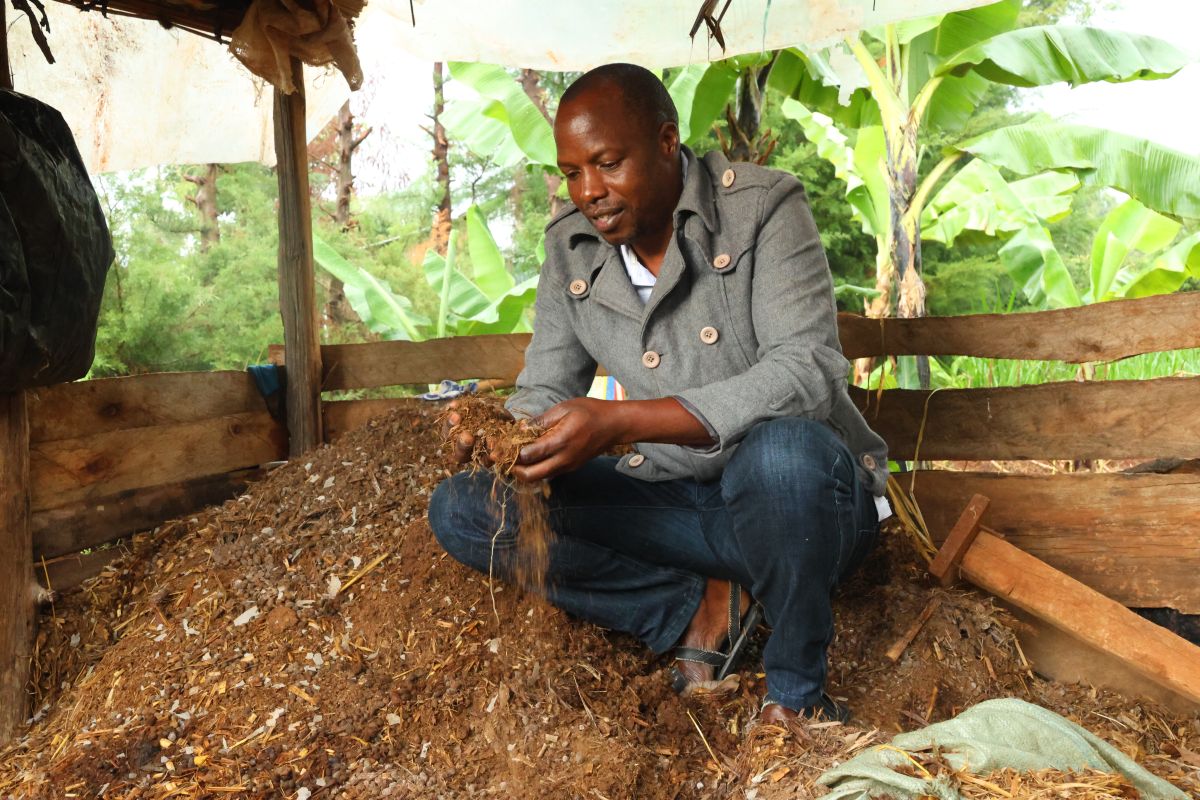
Jonah Kipkemei from Kipkenyo is one of the farmers who participated in the Farmer-Led Research project, where farmers compared the performance of three fertilizer treatments: Bokashi, farmyard manure, and DAP. The aim of the research was to evaluate how each fertilizer affected maize growth, soil health, and crop yield under local farming conditions.
Jonah established three separate plots of land, applying one fertilizer type to each plot. From the germination stage, he observed clear differences. The Bokashi-treated plot had the fastest and most uniform germination, followed by the farmyard manure plot, while the DAP plot was the slowest to germinate.
As the maize continued to grow, the DAP plot initially showed rapid growth. However, as the season progressed, the plants developed yellow leaves, indicating poor plant health. In contrast, the maize grown with Bokashi and farmyard manure developed more gradually but remained healthy, with green leaves throughout the growing season.
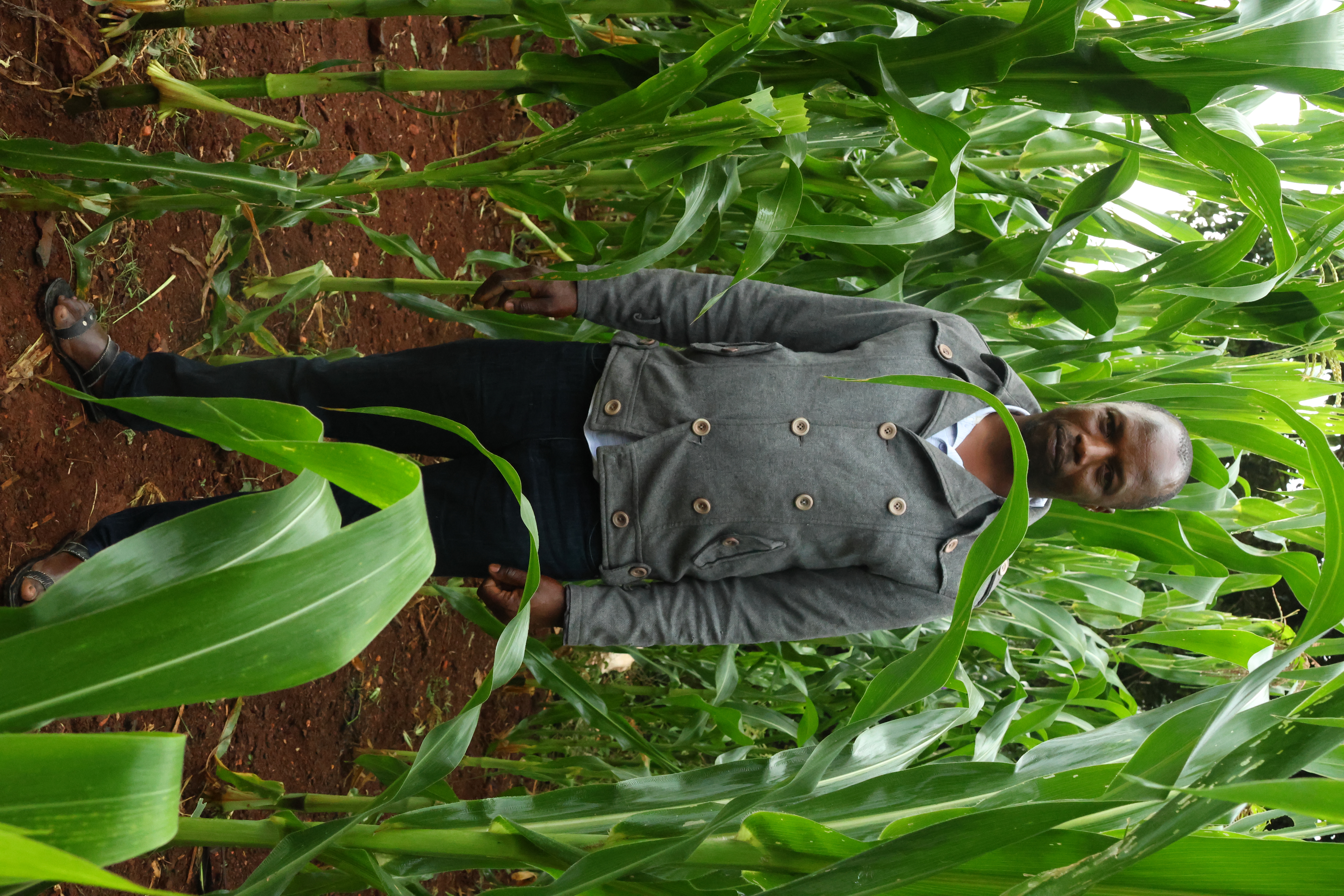 Jonah at his farm
Jonah also noticed differences in plant uniformity. The maize in the Bokashi and farmyard manure plots grew to a consistent height, while the DAP-treated plot had uneven plant growth. When examining the root systems, he found that the Bokashi plot produced the strongest and most extensive roots, followed by the farmyard manure plot. The DAP plot had the weakest root development.
When rainfall became scarce, the differences became even more noticeable. The maize grown with DAP struggled, with many plants wilting and producing small cobs. On the other hand, the Bokashi and farmyard manure plots remained more resilient despite the dry conditions, producing larger cobs and higher maize yields.
Based on his experience, Jonah believes that organic fertilizers offer significant advantages over inorganic fertilizers. He noted that DAP is expensive, depends heavily on adequate rainfall, and does little to improve soil quality. In contrast, Bokashi and farmyard manure are more affordable and readily available to farmers. He also observed that the soil in the organic fertilizer plots became darker, healthier, and more fertile, while the soil in the DAP plot showed little improvement.
Reflecting on the research, Jonah says the Farmer-Led Research project has changed how he farms. He is now confident that organic fertilizers, especially Bokashi, can improve soil health, reduce production costs, increase resilience to changing weather conditions, and deliver better maize yields. He plans to continue using Bokashi and farmyard manure and encourages other farmers to adopt sustainable farming practices for long-term productivity.