
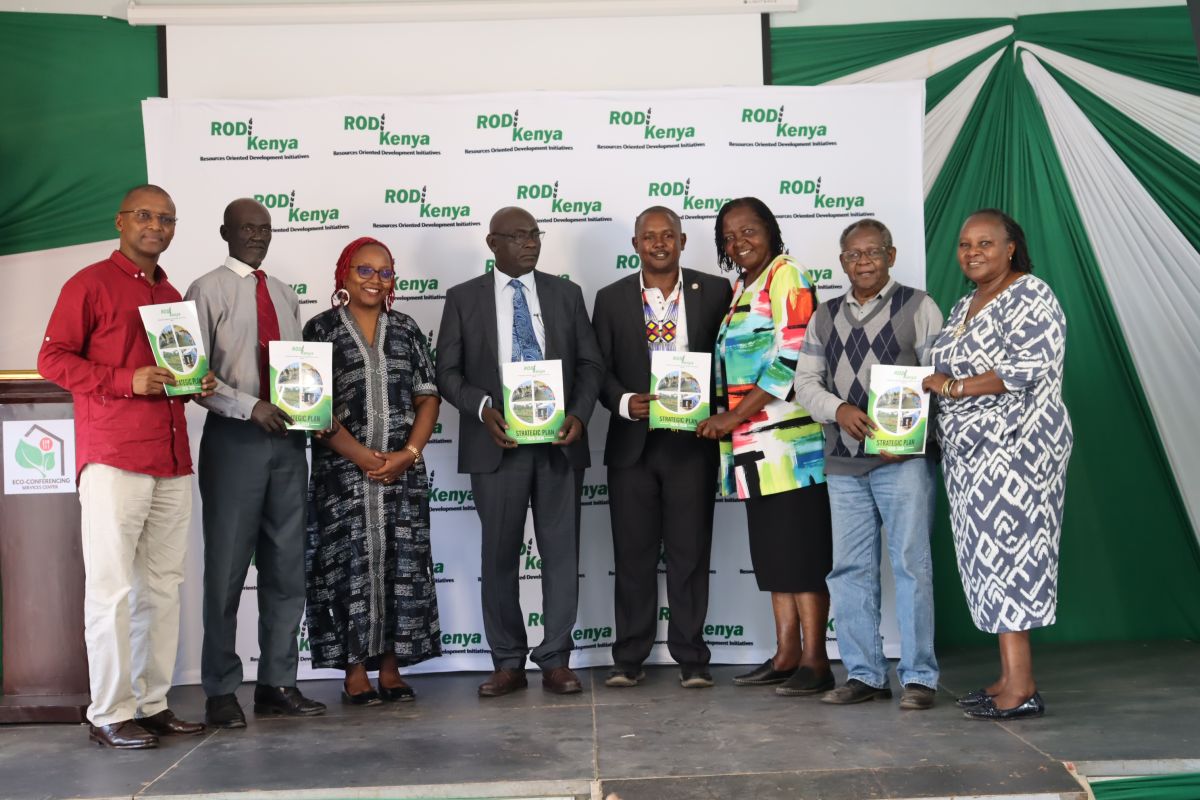
Resources Oriented Development Initiatives (RODI Kenya) has launched its Strategic Plan 2026–2030, reaffirming its long-standing commitment to agroecology, restorative justice, holistic health and institutional resilience across Kenya and the wider Eastern African region. The plan is built around four thematic pillars: Climate Justice and Agroecology; Social and Restorative Justice; Holistic Health and Wellness; and Institutional Resilience, Governance and Partnerships.
The launch event, held at RODI Kenya offices along the Eastern Bypass, brought together government representatives, civil society leaders, development partners and community stakeholders in celebration of the organisation’s enduring impact over the last 35 years.
The event was presided over by the Deputy Director General of Kenya Prisons Service, Mr. Nicholas Maswai, who lauded RODI Kenya for its transformative contribution in prisoner rehabilitation, social reintegration, and the promotion of sustainable livelihoods through agroecology.
Speaking during the launch, RODI Kenya Executive Director Esther Jepkogei Bett said the new five-year strategy is more than a planning document it is a renewed commitment to advancing human dignity, environmental stewardship, social justice and community resilience.
“This Strategic Plan 2026–2030 is a reaffirmation of our mission to walk alongside communities in building sustainable livelihoods, restoring dignity, and promoting justice and ecological balance,” said Ms. Bett.
Ms. Bett highlighted RODI Kenya’s long-standing collaboration with the Kenya Prisons Service, which dates back to 1994, noting that the partnership has focused on prisoner rehabilitation, reintegration, vocational training, psychosocial support and community restoration. The Strategic Plan documents this partnership as one of RODI’s major institutional milestones in advancing restorative justice.
She noted that agroecology continues to play a central role in RODI’s work by equipping communities, including prisoners and ex-offenders, with practical, low-input and climate-resilient farming skills that support food security, income generation and environmental restoration.
“Agroecology has helped improve the health of our soils after years of harmful chemical and fertilizer use, while also empowering families to produce healthy food and generate income from surplus harvests,” she said.
According to RODI Kenya, its interventions over the years have contributed to significant change in both agriculture and justice systems. The Strategic Plan highlights achievements from the previous strategic period, including the adoption of agroecological farming practices by 4,400 smallholder farmers, the planting and survival of 840,000 environmentally friendly trees, and strengthened reintegration and reduced reoffending among ex-offenders through aftercare and entrepreneurial support.
Mr. Maswai commended the organisation for complementing government efforts by equipping prisoners and ex-prisoners with life skills, vocational knowledge and sustainable livelihood options.
“RODI Kenya has made a remarkable contribution to the transformation of lives within and beyond correctional facilities. We have former convicts today earning a living because of the training and support they received through this partnership,” said Mr. Maswai.
He noted that the partnership has enhanced access to rehabilitation and reintegration pathways, while supporting broader reforms aimed at reducing recidivism, promoting human rights compliance and strengthening community cohesion.
The launch also featured testimonies from former beneficiaries, including David Mburu, who shared how his exposure to organic farming while serving a jail term at Nairobi West Prison inspired him to embrace agroecology. Today, he is actively mobilising and mentoring farmers in Kiambu County to adopt safer, healthier and more sustainable farming practices.
“I became interested in organic farming while in prison, and today I have recruited hundreds of farmers in Kiambu County who are now embracing sustainable agriculture,” said Mburu.
RODI Kenya’s new Strategic Plan builds on the organisation’s legacy, which began in 1989 as the Organic Farming Outreach Programme (OFOP) before transitioning into Resources Oriented Development Initiatives (RODI) in 1999. Over the decades, the organisation has grown from an ecological farming initiative into a respected, evidence-based NGO working at the intersection of agroecology, climate justice, restorative justice, health and community development.
The Chairperson of the Executive Management Board, Lenson Njogu, in the Strategic Plan foreword, describes the 2026–2030 roadmap as a call for collective action and stronger partnerships to drive sustainable and equitable transformation. The plan invites state and non-state actors, development partners and communities to join RODI in building a future where justice, wellness, food sovereignty and environmental stewardship thrive together.
Among those present at the launch were RODI Kenya Chairman Lenson Njogu, David Karanja (OACK), Legal Resource Forum Executive Director Esau Riaroh, Dr. Zacharia Mwangi (Witness Protection Board), representatives from the Kiambu County Government Agriculture Department, and other distinguished guests.
As RODI Kenya begins implementing its 2026–2030 Strategic Plan, the organisation remains committed to deepening its impact, strengthening partnerships, and expanding community-led solutions that promote safe food systems, social justice, human dignity and resilient livelihoods.